How to Evaluate a Luxury Condo Community in South Florida: A Buyer's Framework
By Leon Damjanovic, REALTOR® — Polaris Advisors · · 10 min read · 1800 words
Category: Buyer Guides · Tags: buyer-guide, framework, evaluation, luxury-condos, south-florida, methodology
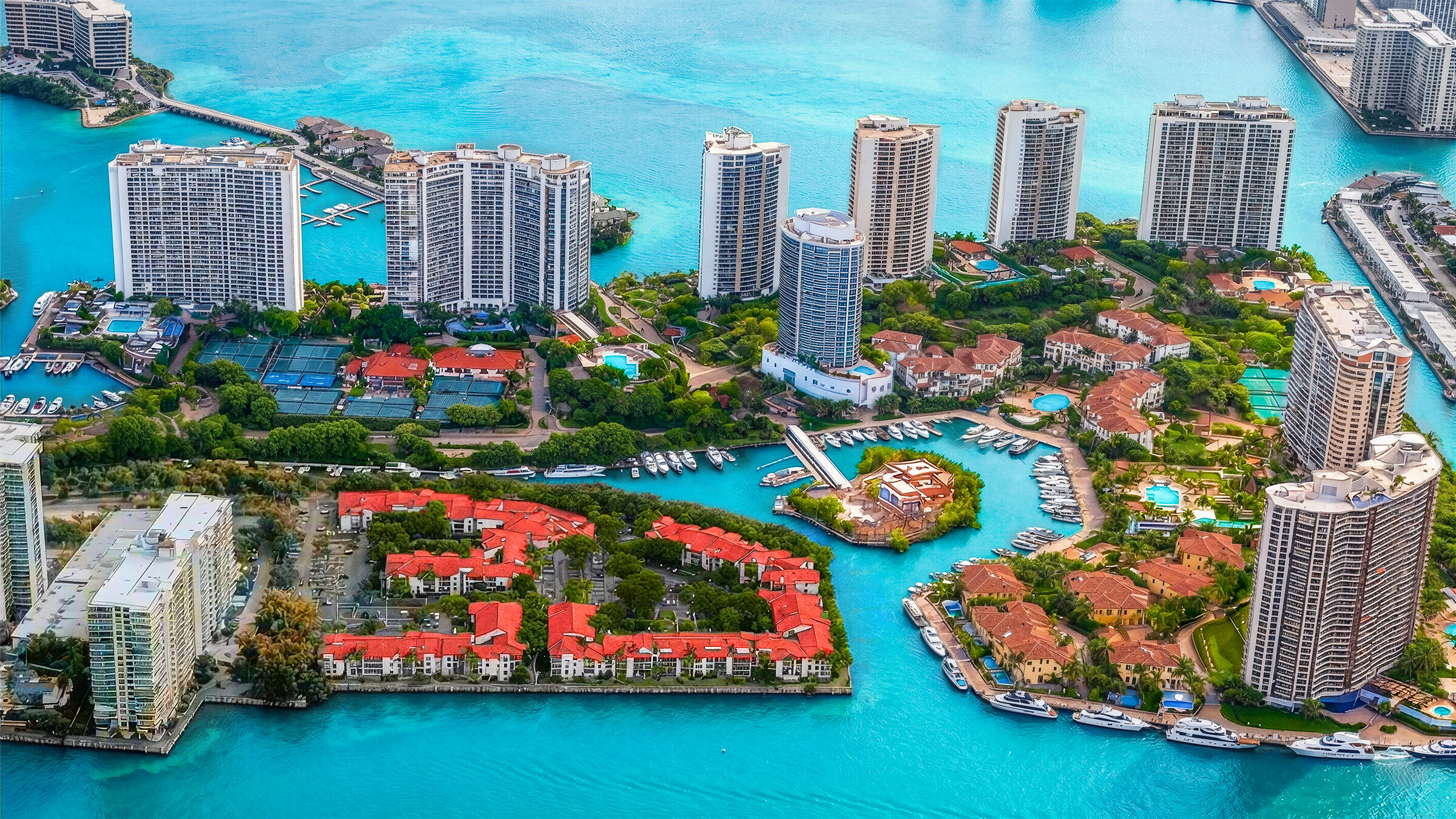
After closing over $100 million in South Florida real estate, one pattern keeps repeating: buyers start by looking at individual units and buildings, and end up confused because there's too much to compare. Sunny Isles has 40+ towers. Aventura has a dozen luxury addresses. Bal Harbour, Surfside, North Miami Beach, they all blur together after a while.
Here's the framework we actually use with clients. Eight factors, in order of importance, that cut through the noise.
Last updated: April 2026
Factor 1: Community vs. Standalone Building
This is the first fork in the road, and most buyers don't think about it early enough.
A standalone building is one tower with its own pool, gym, and lobby. That's it. If the building's management is bad, or the amenities get dated, or your neighbors are noisy, you've got no escape valve. Your entire investment is in that one structure.
A community is multiple buildings sharing large-scale amenities: clubs, marinas, tennis, resort pools. The infrastructure investment is spread across hundreds of units and maintained at a scale that a single building can't match. If you don't like your building, you can sell and move to a different building in the same community without leaving your social circle or losing your club access.
Communities like Williams Island (13 buildings, private club, marina) and Turnberry Isle (4 towers plus JW Marriott) operate fundamentally differently from a standalone tower in Sunny Isles. The monthly costs are higher, yes. But what you get for those costs is qualitatively different.
Ask yourself: do you want a nice apartment with a pool, or do you want a lifestyle campus? That answer drives everything else.
Factor 2: Waterfront Type
South Florida has three waterfront categories, and they're not interchangeable:
- Oceanfront (Atlantic): Direct beach access, ocean views, salt air. Sunny Isles Beach, Bal Harbour, Surfside. Premium pricing, higher insurance, more exposure to storms.
- Intracoastal: Protected waterway, calmer water, marina access, no beach. Williams Island, Aventura waterfront. Lower insurance costs, better boating access, no salt corrosion on your terrace furniture.
- Bay/Lake: Interior water views without direct Intracoastal access. Quieter, typically more affordable.
Here's what most buyers get wrong: they assume oceanfront is automatically "better." It's not. It's different. If you boat, Intracoastal is actually more practical because you've got marina access and can cruise the waterway without dealing with ocean inlets. If you want to walk to the beach daily, then yes, oceanfront is the only option that works. But the Atlantic is 5 minutes from most Intracoastal addresses, so you're really paying a premium for the walk vs. a short drive.
Factor 3: Amenity Depth and Who Pays
This is where people get tripped up. A building's brochure says "resort-style amenities." What does that actually mean?
Questions to ask:
- Is there a private club, or just a building gym and pool?
- Is the club residents-only, or shared with hotel/resort guests?
- What's the club fee, and is it separate from HOA?
- How many tennis/pickleball courts? (Two courts for 300 units means you're never getting a reservation.)
- Is there a real marina, or just a dock with 10 slips?
- What dining options are on-site vs. requiring a drive?
At Williams Island, for example, the Club has fine dining, spa, fitness, 10 tennis courts, and it's residents-only. The Island Pool and Olea restaurant is a separate facility from the Club. And every building has its own pool and gym on top of that. That's three layers of amenities. Most standalone buildings have one.
Factor 4: Building Age vs. Condition
Buyers fixate on "year built." It's not the right metric. A 1997 building that's been well-maintained and recently renovated can be in better shape than a 2010 building that's been neglected.
What to look at instead:
- Reserve fund balance: How much does the association have saved for major repairs? Florida law now requires reserve studies. Ask for the latest one.
- Recent assessments: Has the building had special assessments in the last 5 years? What were they for? How much?
- Lobby/common area condition: Walk the lobby, hallways, pool deck, gym. Are they well-maintained or showing their age?
- Concrete restoration status: Post-Surfside, every older South Florida building is undergoing or planning structural inspections. Ask where the building stands.
At Williams Island, the buildings range from 1985 (4000 Island Blvd) to 2013 (Bellini). Several of the classic towers have recently completed or are planning lobby renovations and concrete restoration. The condition gap between a 1985 building that's been kept up and a 2005 building that hasn't is real, and it favors the maintained one.
Factor 5: Security Model
Three tiers in South Florida:
- Building-only security: Lobby attendant, cameras, key fob access. Standard for most standalone buildings.
- Gated community: Perimeter gate with staffed gatehouse, plus building security. Williams Island, Turnberry Isle, Porto Vita.
- Private island: Single bridge entry with 24-hour gatehouse, no alternative access. Only Williams Island in Aventura.
The difference between a gated community and a private island is the single point of entry. At Williams Island, there's one bridge. Everyone who enters is logged. That's a level of access control that mainland gated communities, even good ones, can't replicate because they typically have multiple entry points.
Factor 6: Resale Liquidity
Can you sell your unit when you want to? This depends on:
- Unit count: More units means more transactions means more comparable sales and a more liquid market. A 70-unit boutique building trades less frequently than a 300-unit tower.
- Price point diversity: Communities with entry-level through premium options attract a wider buyer pool.
- Seasonal demand: Does the community attract snowbirds and international buyers? Seasonal demand creates a predictable annual buying cycle.
- Rental flexibility: Buildings that allow rentals give owners an exit option beyond selling.
Williams Island's 13 buildings and ~2,400 units create significant market liquidity. In any given month, there are typically 30 to 60 active listings across the island, which means there's always pricing data and always buyers in the market.
Factor 7: Location Within the Region
South Florida buyers tend to cluster in a corridor:
- Aventura / North Miami Beach: Central, two airports within 30 minutes, Aventura Mall, family-oriented. Williams Island, Turnberry, Porto Vita.
- Sunny Isles Beach: Oceanfront, high-rise dominated, international buyer base, higher insurance. Jade, Porsche Design, Turnberry Ocean Colony.
- Bal Harbour / Surfside: Quieter oceanfront, ultra-premium, village feel. St. Regis, Oceana, Fendi Chateau.
- Brickell / Downtown Miami: Urban, walkable, younger demographic, no community amenities. Standalone towers.
Where you buy determines your daily life more than any building feature. If you want to be near Aventura Mall, good schools, and both airports, the Aventura corridor makes the most sense. If you need oceanfront, you're in Sunny Isles or Bal Harbour. Don't buy a building and then complain about the location, pick the location first.
Factor 8: Total Cost of Ownership
This is where most buyers miscalculate. The purchase price is maybe 60% of your actual cost. The rest:
- Monthly HOA: $1,200 to $6,000+/month depending on building and unit size.
- Club fees: In community settings, separate from HOA. Factor $200 to $500/month.
- Property taxes: Florida has no state income tax, but property taxes are real. Budget 1.8% to 2.2% of assessed value annually.
- Insurance: HO-6 policy (walls-in), $2,000 to $8,000/year. Flood insurance may be additional.
- Special assessments: Unpredictable but real. Reserve study review is essential.
We always build a total-cost-of-ownership model for our clients before they make an offer. A $700K condo with $2,500/month HOA has a very different annual cost than a $900K condo with $1,500/month HOA. The cheaper purchase price isn't always the better deal.
Putting It Together
Here's how we'd score a few communities using this framework:
| Factor | Williams Island | Turnberry Isle | Sunny Isles Tower |
|---|---|---|---|
| Community vs. standalone | Full community | Full community | Standalone |
| Waterfront type | Intracoastal (private island) | Intracoastal (mainland) | Oceanfront |
| Amenity depth | Deep (club + pool + marina + tennis) | Deep (resort + golf) | Building-only |
| Security model | Private island, single bridge | Gated community | Building lobby |
| Resale liquidity | High (2,400 units) | Moderate (700 units) | Varies |
| Price entry point | $400K | $500K | $500K to $1M+ |
No community wins every category. The question is which factors matter most to you. If you'd like to walk through this framework for your specific situation, we're happy to do that. It's what we do.